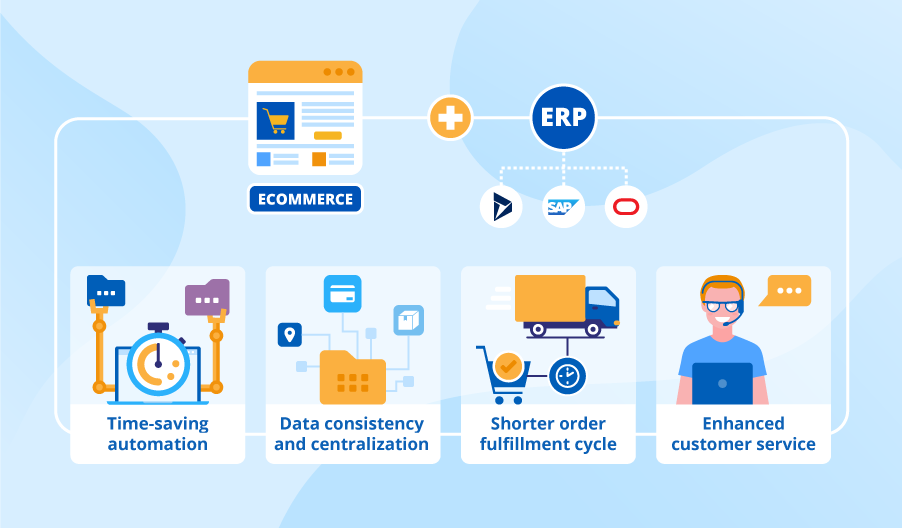
Welcome to the ultimate guide to E-Commerce ERP systems! If you’re looking to streamline your online business operations and enhance your overall efficiency, you’re in the right place. In this comprehensive article, we’ll cover everything you need to know about E-Commerce ERP systems, from what they are and how they work to the top providers in the market. Whether you’re a small business owner or a seasoned e-commerce pro, this guide will help you make informed decisions when it comes to choosing the right ERP system for your needs.
Understanding E Commerce ERP Systems
When it comes to running an e-commerce business, having an ERP system in place is crucial for managing various aspects of the operation. But what exactly is an E Commerce ERP system? To put it simply, an ERP system (Enterprise Resource Planning) is a software solution that integrates all the key functions of a business into one comprehensive system. In the case of e-commerce, this includes everything from inventory management and order processing to customer relationship management and financial tracking.
An E Commerce ERP system helps streamline and automate many of the day-to-day tasks involved in running an online store. For example, instead of manually updating inventory levels after each sale, the ERP system can automatically adjust the numbers in real-time. This not only saves time but also reduces the risk of errors that can occur with manual data entry.
Another key benefit of an E Commerce ERP system is the ability to centralize data from various departments within the business. This means that information such as customer orders, inventory levels, and financial records can all be accessed from a single platform. This not only improves efficiency but also provides a more comprehensive view of the business as a whole.
Furthermore, an E Commerce ERP system can help businesses manage their supply chain more effectively. By integrating data from suppliers, manufacturers, and distributors, the system can provide greater visibility into the entire supply chain process. This can help identify potential bottlenecks or issues and allow for quicker resolution, ultimately improving the overall speed and efficiency of the supply chain.
Overall, an E Commerce ERP system is a valuable tool for any e-commerce business looking to streamline operations, improve efficiency, and gain better insight into their business processes. By centralizing data, automating tasks, and integrating key functions into one system, businesses can save time, reduce errors, and make more informed decisions based on real-time data.
Key Features of E Commerce ERP Software
When it comes to E Commerce ERP software, there are several key features that are essential for businesses to consider. These features are designed to help streamline operations, improve efficiency, and ultimately drive sales. Here are some of the most important features to look for when choosing an E Commerce ERP solution:
1. Inventory Management
One of the most critical features of E Commerce ERP software is inventory management. This feature allows businesses to track their inventory levels in real-time, manage stock levels, and automate reorder processes. With inventory management, businesses can avoid stockouts, reduce excess inventory, and optimize their supply chain processes.
2. Order Management
Order management is another essential feature of E Commerce ERP software. This feature allows businesses to manage their orders efficiently, from the time they are placed to when they are fulfilled. With order management, businesses can track orders, process payments, and update customers on the status of their orders. Additionally, order management can help businesses automate order processing, streamline fulfillment processes, and improve customer satisfaction.
3. Customer Relationship Management (CRM)
CRM is a key feature of E Commerce ERP software that helps businesses manage their relationships with customers. With CRM, businesses can track customer interactions, monitor customer preferences, and personalize their marketing efforts. By utilizing CRM, businesses can build stronger relationships with customers, increase customer loyalty, and drive repeat sales.
4. Reporting and Analytics
Reporting and analytics are essential features of E Commerce ERP software that provide businesses with valuable insights into their operations. With reporting and analytics, businesses can track key performance indicators, monitor sales trends, and identify opportunities for growth. By utilizing reporting and analytics, businesses can make data-driven decisions, optimize their processes, and enhance their overall performance.
5. Integration Capabilities
Integration capabilities are another important feature to consider when choosing E Commerce ERP software. This feature allows businesses to integrate their E Commerce platform with other systems, such as accounting software, shipping carriers, and marketing tools. By having integration capabilities, businesses can streamline their operations, reduce manual data entry, and improve overall efficiency.
Overall, E Commerce ERP software offers a wide range of features that are designed to help businesses optimize their operations, drive sales, and improve customer satisfaction. By selecting a solution that includes key features such as inventory management, order management, CRM, reporting and analytics, and integration capabilities, businesses can set themselves up for success in the competitive E Commerce landscape.
Benefits of Implementing E Commerce ERP
Implementing an E Commerce ERP system can bring numerous benefits to a business. From increased efficiency to improved customer satisfaction, the advantages of using E Commerce ERP are vast. Let’s explore some of the key benefits in more detail:
1. Streamlined Business Processes
One of the primary benefits of implementing E Commerce ERP is the streamlining of business processes. By integrating all key business functions such as inventory management, order processing, and accounting into a single system, E Commerce ERP eliminates the need for manual data entry and reduces the risk of errors. This results in faster and more accurate processing of orders, leading to improved efficiency and cost savings for the business.
2. Real-Time Data Analysis
Another significant advantage of E Commerce ERP is the ability to access real-time data analysis. With all business data stored in a centralized database, managers can easily generate accurate reports and analytics to inform decision-making. This real-time visibility into key metrics such as sales performance, inventory levels, and customer behavior allows businesses to make informed decisions quickly and adapt to changing market conditions.
3. Enhanced Customer Experience
Implementing E Commerce ERP can also lead to an enhanced customer experience. By centralizing customer data and integrating it with order processing and inventory management systems, businesses can provide personalized service to customers. For example, businesses can set up automated order notifications, track shipments in real-time, and offer personalized product recommendations based on past purchases. This level of personalized service can help businesses build customer loyalty and increase repeat purchases.
Furthermore, E Commerce ERP systems often include customer relationship management (CRM) functionalities, allowing businesses to better track and analyze customer interactions. By storing detailed customer information such as purchase history, preferences, and communication history in one centralized system, businesses can tailor their marketing strategies and improve customer satisfaction. This personalized approach to customer service can result in increased customer retention and a stronger brand reputation.
In conclusion, implementing E Commerce ERP can bring a multitude of benefits to a business, from streamlining business processes to enhancing the customer experience. By leveraging the power of a centralized system to integrate key business functions and provide real-time data analysis, businesses can improve efficiency, make informed decisions, and build long-lasting relationships with customers. Overall, E Commerce ERP is a valuable tool for businesses looking to stay competitive in today’s digital marketplace.
Challenges of E Commerce ERP Implementation
Implementing an E Commerce ERP system can bring many benefits to a business, but it also comes with its fair share of challenges. From integrating different systems to training employees on the new software, there are several hurdles that companies may face during the implementation process.
One of the main challenges of E Commerce ERP implementation is the integration of existing systems. Many businesses already have various software and tools in place to manage different aspects of their operations. Integrating these systems with the new ERP software can be a complex and time-consuming process. It requires detailed planning and coordination to ensure that all systems work seamlessly together.
Another challenge is data migration. When implementing a new ERP system, businesses need to transfer data from their old systems to the new platform. This process can be tricky, as data may be stored in different formats and locations. Ensuring that all data is accurately migrated without any loss or corruption is crucial for the success of the implementation.
Training employees on the new ERP software is also a significant challenge. Many employees may be resistant to change or unfamiliar with using such complex systems. Providing adequate training and support is essential to ensure that employees can effectively use the new software. This may require investing time and resources in training programs and workshops.
One often overlooked challenge of E Commerce ERP implementation is managing expectations. Businesses may have high hopes for the new system, expecting it to solve all their problems and streamline operations overnight. However, the reality is that implementing an ERP system is a gradual process that requires time and effort. Managing expectations and communicating realistic timelines and goals is essential to prevent disappointment and frustration among stakeholders.
In addition to these challenges, businesses may also face technical issues such as system downtime, compatibility problems, and software glitches during the implementation process. It is important for businesses to have a contingency plan in place to address these issues quickly and minimize disruptions to their operations.
In conclusion, while implementing an E Commerce ERP system can be a daunting task, it is not without its challenges. By carefully planning and addressing potential hurdles proactively, businesses can increase their chances of a successful implementation and reap the full benefits of their new ERP software.
Future Trends in E Commerce ERP Solutions
As technology continues to advance rapidly, the world of E Commerce ERP solutions is also evolving to keep up with the changing demands of businesses and consumers. Here are some future trends that we can expect to see in the world of E Commerce ERP:
1. Artificial Intelligence (AI) Integration
AI is already being used in various aspects of E Commerce, from chatbots to personalized recommendations. In the future, we can expect to see AI being integrated into ERP systems to help automate decision-making processes and improve efficiency. This can help businesses streamline their operations and provide better customer experiences.
2. Blockchain Technology
Blockchain technology has the potential to revolutionize the way E Commerce transactions are conducted. By using blockchain technology, businesses can ensure secure and transparent transactions, as well as reduce the risk of fraud. In the future, we can expect to see more E Commerce ERP solutions incorporating blockchain technology to provide added security and trust for both businesses and consumers.
3. Cloud-Based ERP Systems
With the increasing popularity of cloud computing, more businesses are turning to cloud-based ERP systems for their E Commerce operations. Cloud-based ERP systems offer scalability, flexibility, and cost-effectiveness, making them a popular choice for businesses of all sizes. In the future, we can expect to see more E Commerce ERP solutions being offered as cloud-based platforms to meet the growing demand for flexible and scalable solutions.
4. Mobile Optimization
With more consumers using mobile devices to shop online, E Commerce ERP solutions will need to be optimized for mobile devices. This means that ERP systems will need to be designed with responsive design principles in mind, ensuring that they work seamlessly on a variety of devices and screen sizes. In the future, we can expect to see more E Commerce ERP solutions being optimized for mobile to provide a better shopping experience for consumers.
5. Integration with Virtual Reality (VR) and Augmented Reality (AR)
One of the most exciting future trends in E Commerce ERP solutions is the integration of VR and AR technologies. These technologies have the potential to revolutionize the way consumers shop online by providing immersive and interactive shopping experiences. In the future, we can expect to see E Commerce ERP solutions incorporating VR and AR to allow consumers to visualize products in real-time, try on virtual clothing, and even virtually walk through stores. This can help businesses stand out from the competition and provide a unique shopping experience for their customers.
In conclusion, the future of E Commerce ERP solutions looks bright with these exciting trends on the horizon. By staying ahead of the curve and embracing these technologies, businesses can future-proof their operations and provide better experiences for their customers.